Fujino Art House
A craft experience facility tucked deep in the nature of Sagamihara-Tsukui. Pick the toy you want to make, buy a ticket, and use the workshop's tools and scrap materials freely to build a one-of-a-kind piece.
Information
- Area
- Midori-ku, Sagamihara City, Kanagawa
- Address
- 4819 Makino, Midori-ku, Sagamihara, Kanagawa
- Phone
- 042-689-3030
- Hours
- 9:00–21:00 (1F workshop 9:00–17:00, craft sign-up until 15:00)
- Closed
- Tuesdays (next day if public holiday) and the New Year holidays (open daily in July/August, with extra opening days during peak season)
- Official site
- https://fujino-art.jp/
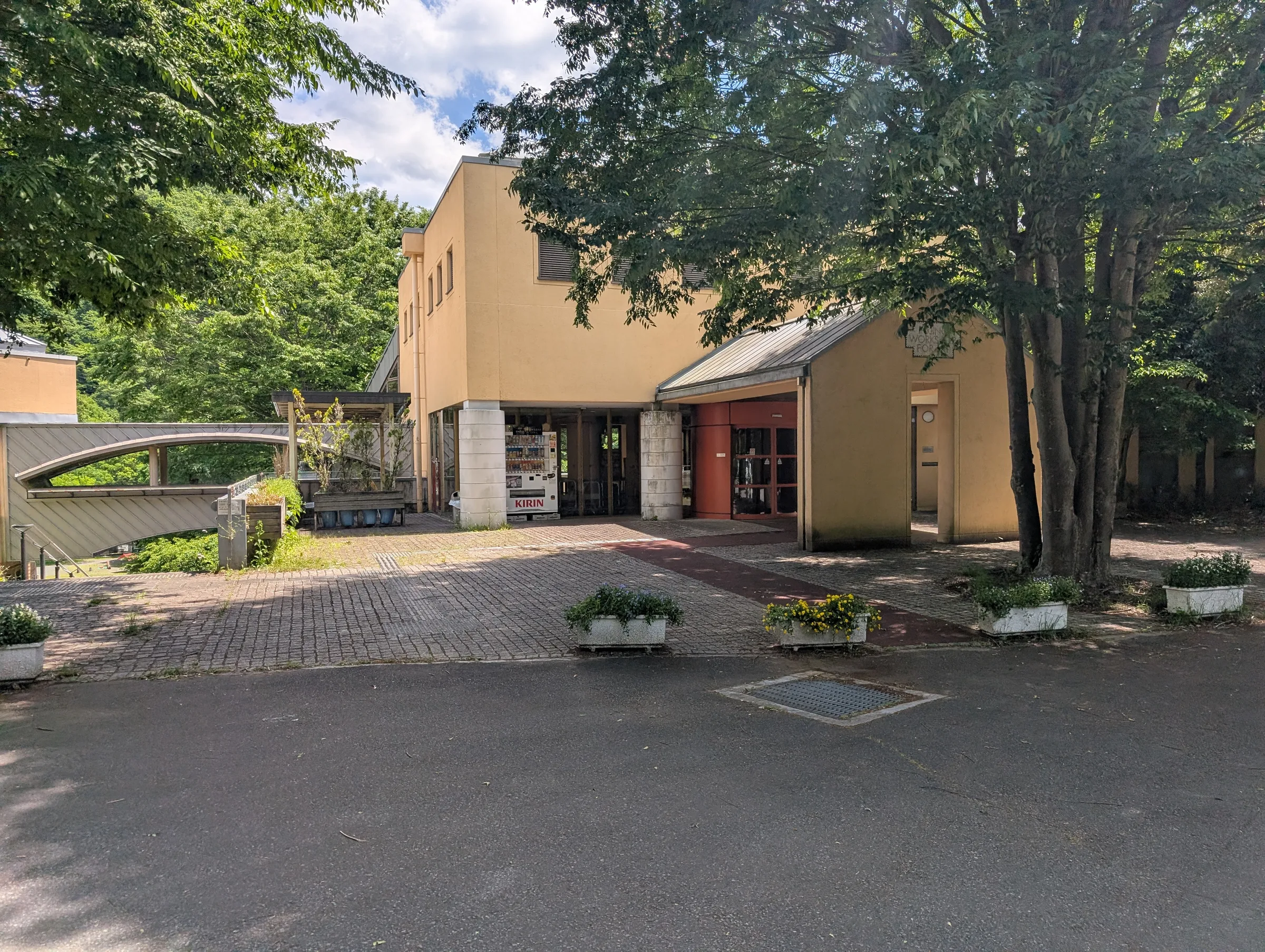
Drive from central Sagamihara toward Tsukui, cross over Lake Sagami, and keep going deeper. Just when mountains and rivers are all you can see, a yellow-walled building suddenly appears — that’s Fujino Art House. Run by the prefecture as a craft-experience and lodging spot, the surrounding air feels like you’ve gone on a proper trip.
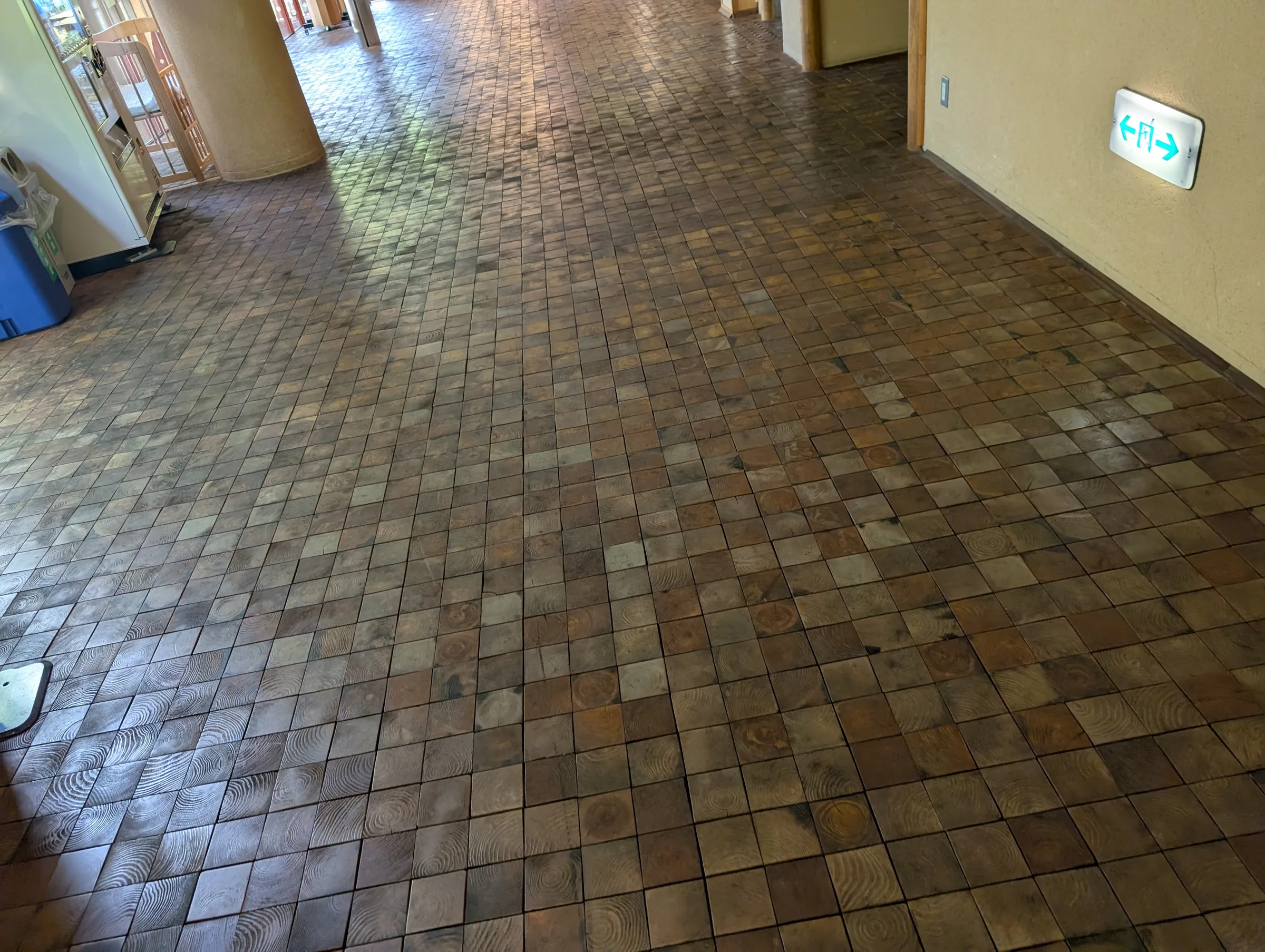
The first surprise once you step inside is that the floor around the entrance clatters under your feet. It’s paved with wooden blocks, and stepping on them sets the pieces tapping against each other. Kids start playing with it the moment they walk in, so it takes a while to actually reach the workshop (ha). And if you step on certain blocks… interesting little gimmicks fire off.
You start by picking what to make and buying a ticket
The workshop has a unique setup: first you check the finished samples lined up on the shelves and decide what you want to build. Wooden boats, cars, planes, diorama-style houses — the samples themselves are displayed in rows, and kids start agonizing over the choice. Once they’ve decided, you buy a ticket (most are 1,500 yen and up) at the counter, and that’s the start.
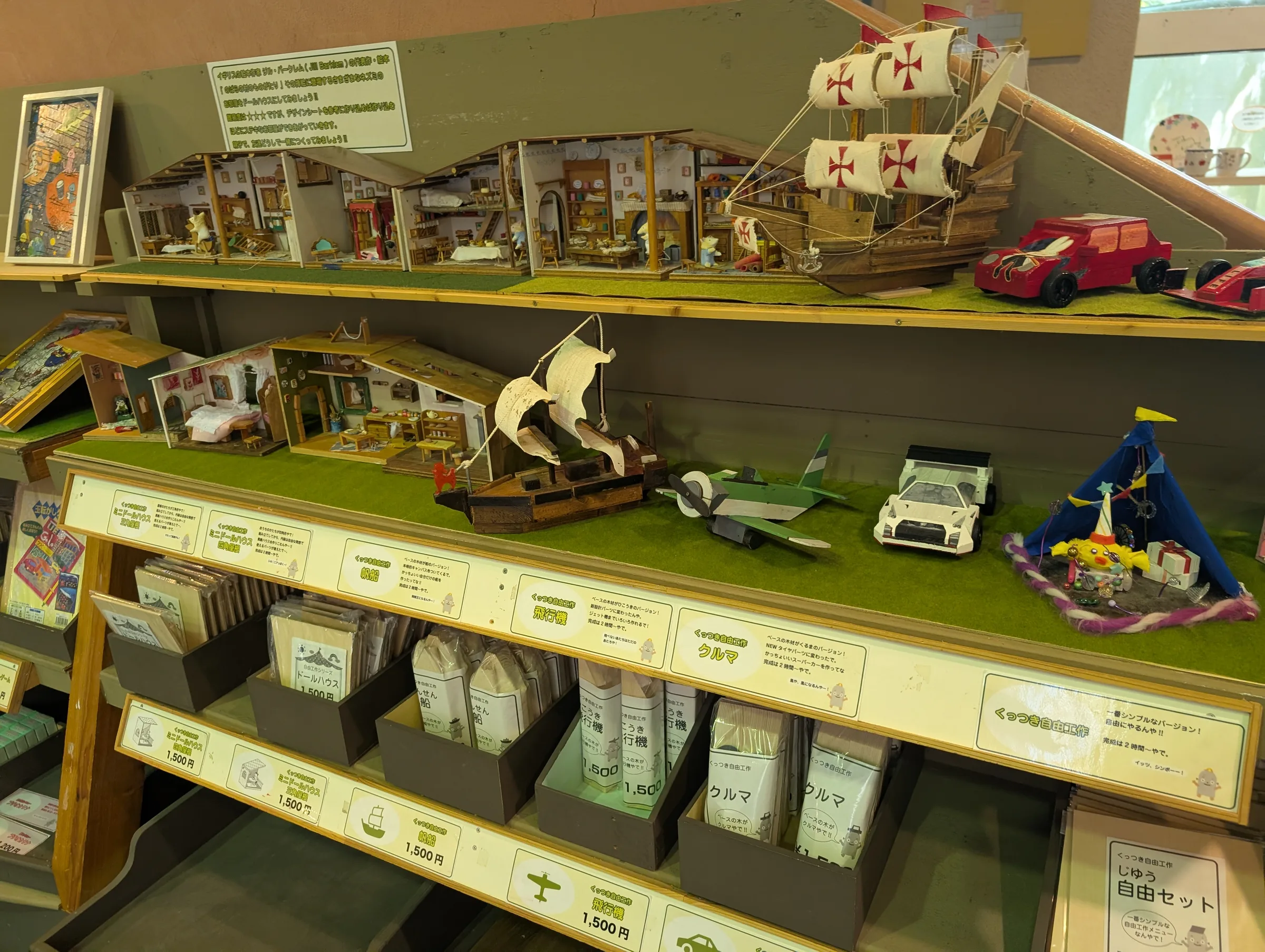
This ticket system is quietly brilliant — for a kid who tends to say “I want to do all of them,” it forces them to pick one of their own accord. It took our son about 10 minutes to settle on something, but his focus while building was on another level.
Tools and scrap material — use as much as you want
The workshop itself is a wide room with big tables lined up, with plenty of space for a family to spread out. Various tools are mounted along the walls, and the staff will show you how to use anything you need.
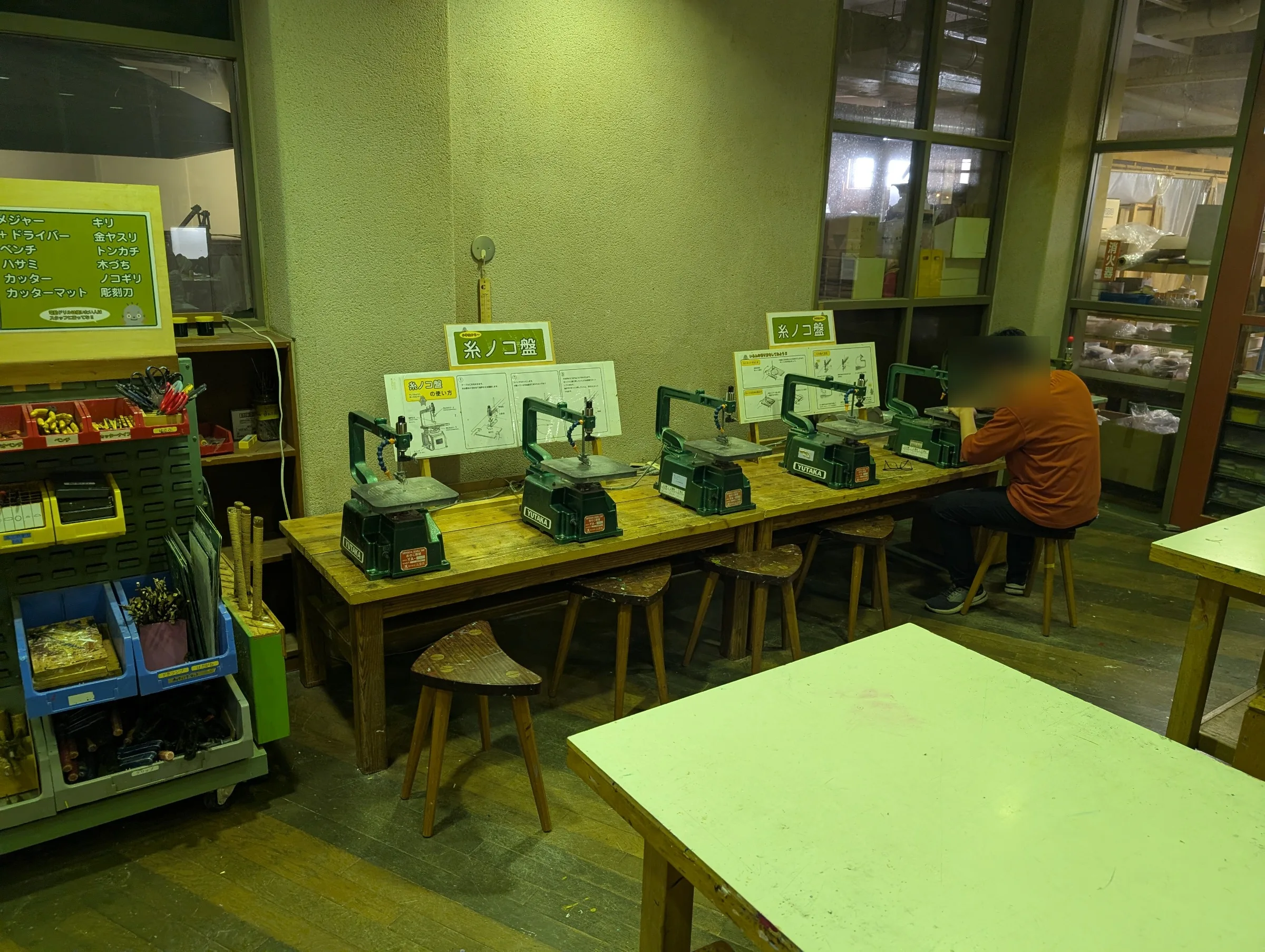
What surprised me is that the hammers, files, saws, glue, even the paint — all free to use as much as you like. On top of that, scrap wood and recycled materials are piled high in sorted bins, and you can grab whatever you want. The moment you think “I want to add a little decoration here,” you can just pick a piece, cut it, and glue it on.
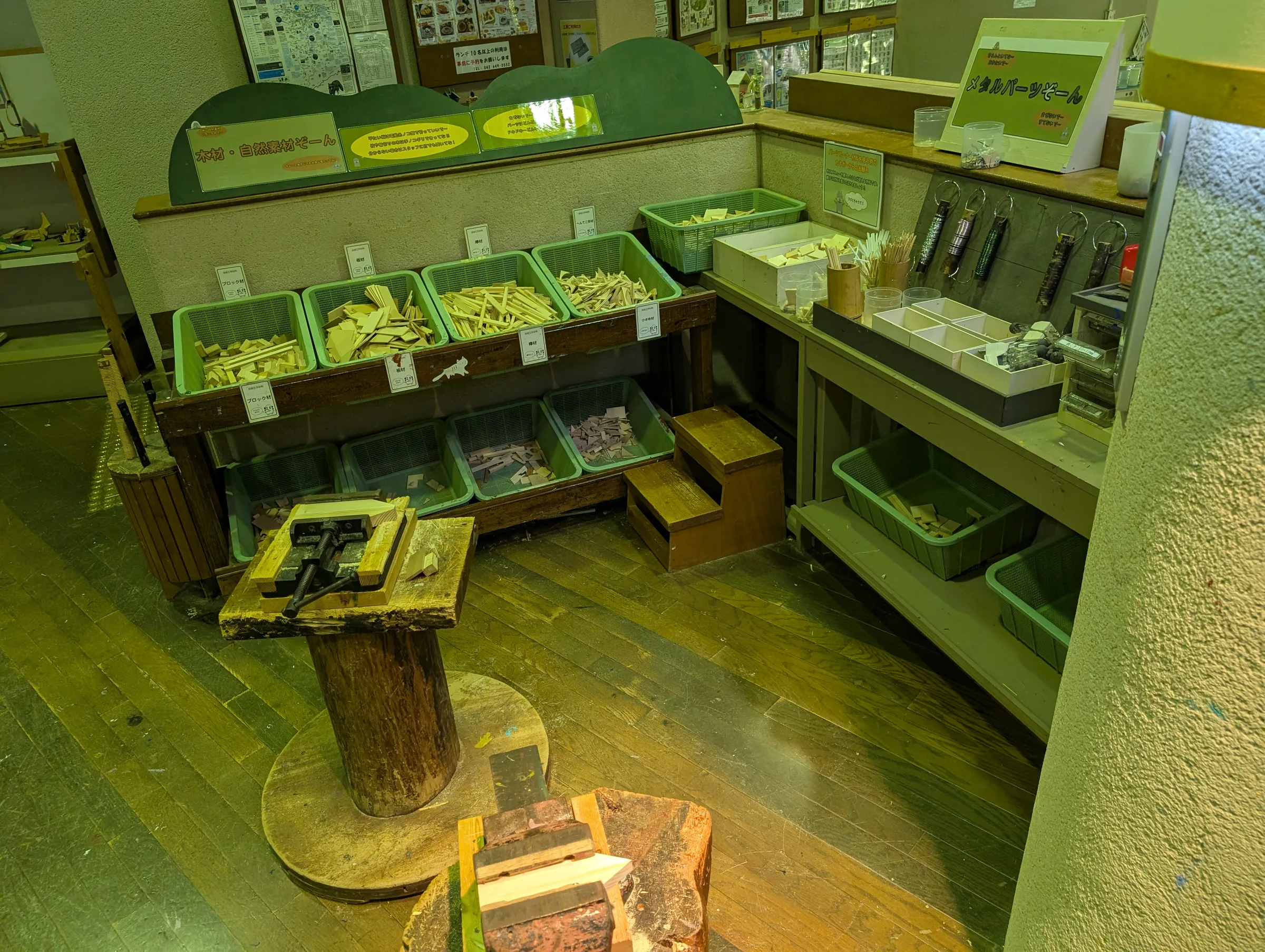
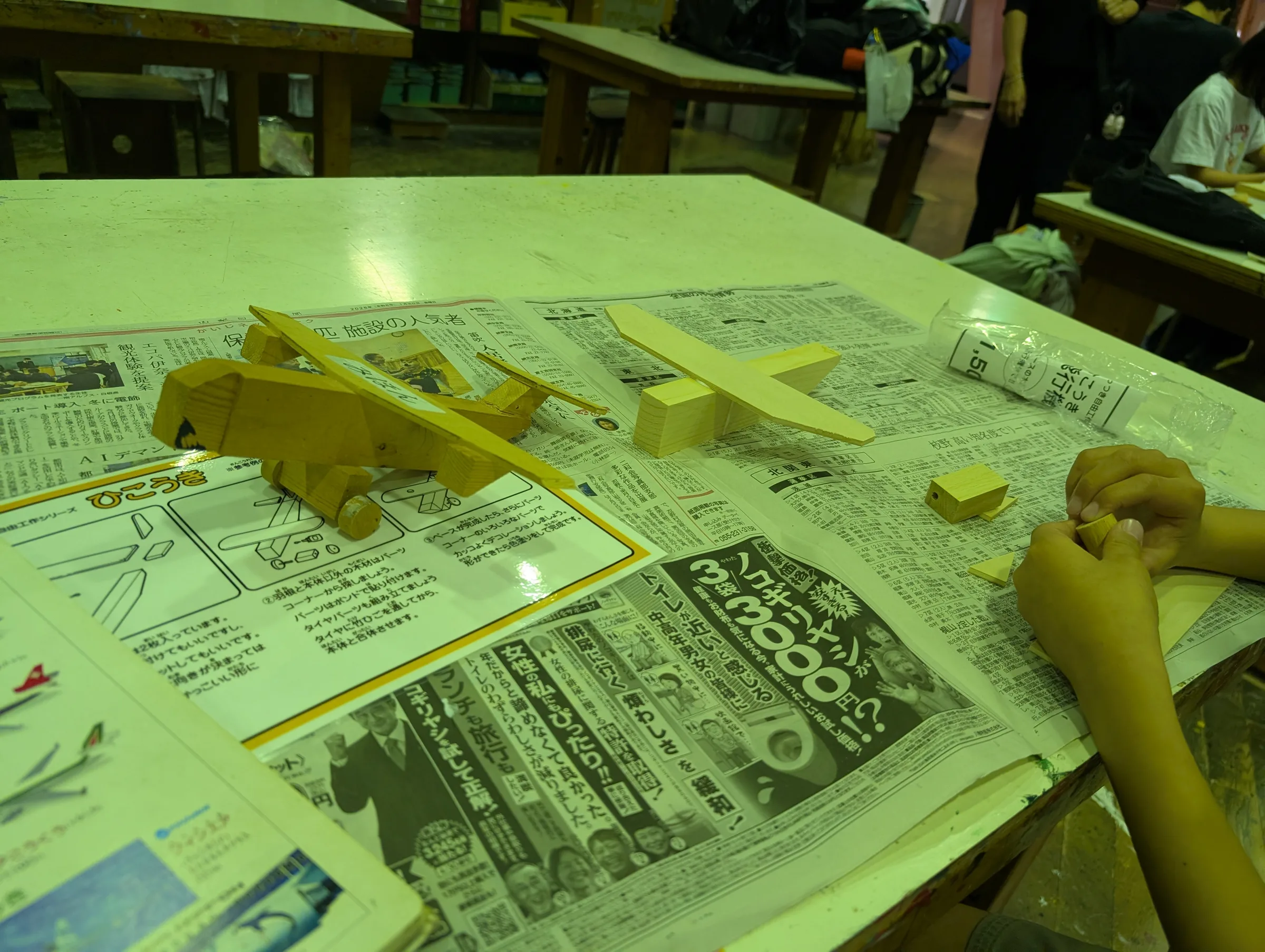
When you try to craft at home, you usually give up at the stage of gathering materials, so an environment where “if you think of it, the part is right there” really lights up the creative side. Perfect for kids who love making things! Our son started adding parts that weren’t in the kit and ended up building a totally original airplane that looked nothing like the sample.
“Can we step out for a bit?” — a totally normal thing to ask
The workshop is roomy with plenty of seats, and the whole place feels unhurried.
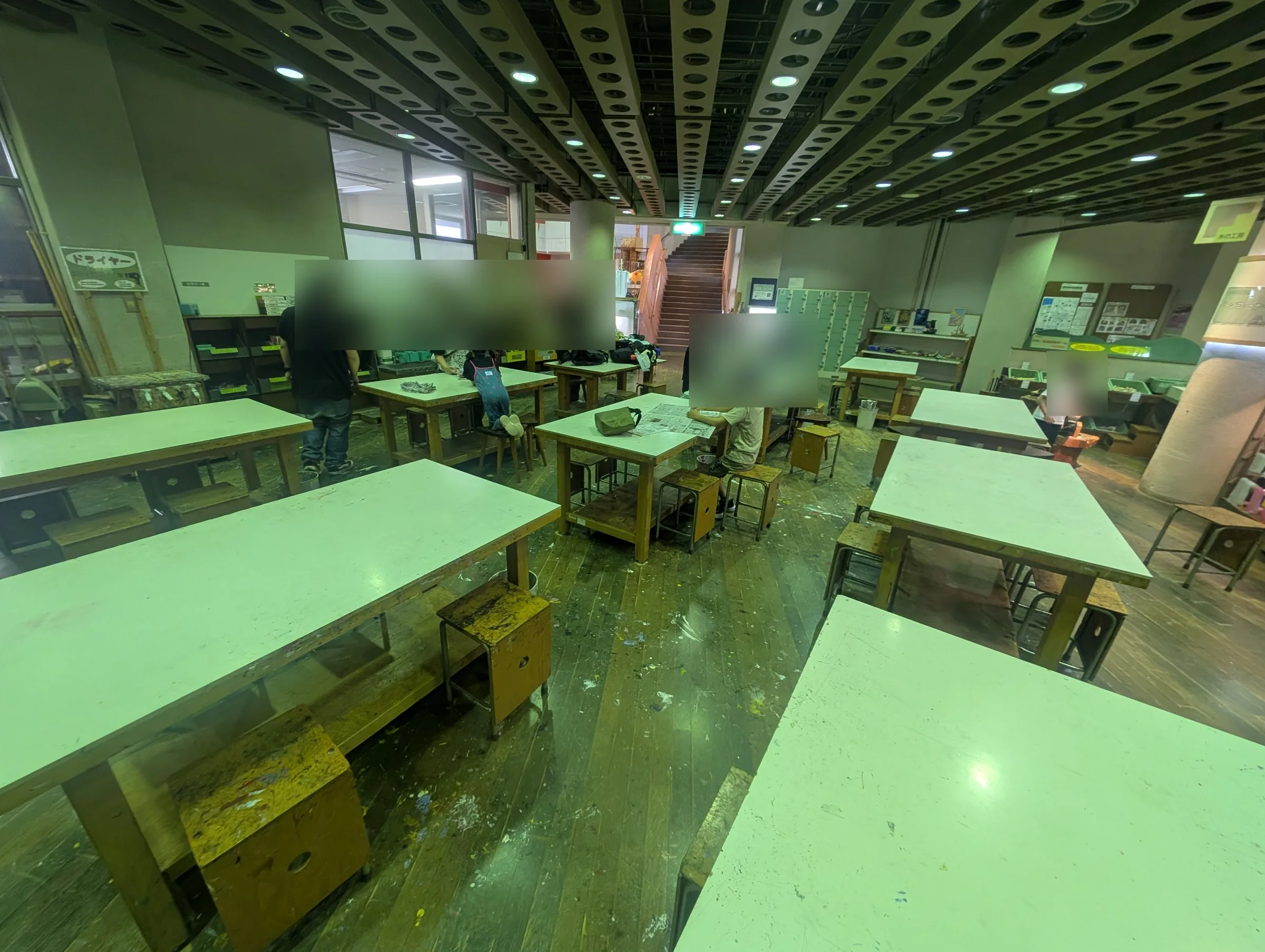
What stayed with me most was the facility’s generosity with time. At hands-on places in the city, the pressure of turnover always creeps in — “we have to finish within the time slot.” Here, when we approached lunchtime and asked “can we step out to eat for a bit?” the front desk replied “of course, take your time” with a tone that made it feel completely normal, and the tension just left my shoulders. You can leave your work-in-progress on the table and pick up right where you left off when you get back. True to the name “art house” — the time here flows like it would at home.
The workshop takes no reservations and accepts walk-ins anytime, which makes it easy to swing by on a Lake Sagami or Tsukui-area trip. Just note that it closes on Tuesdays (next day if a public holiday), so that’s worth checking before you head out.